
African Finance Ministers Call on Private Sector to Bridge Development Gap at AIF 2025
African finance ministers gathered at the 2025 Africa Investment Forum (AIF) are issuing a clear challenge to the private sector: the time for talking about Africa's potential is over. Now it's time to deliver bankable projects that actually close the continent's massive infrastructure and developme
11/27/20255 min read
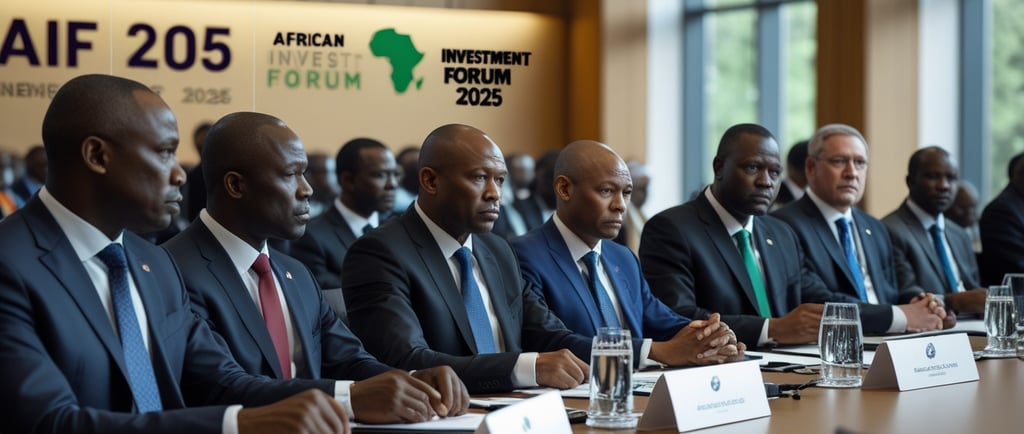
African finance ministers gathered at the 2025 Africa Investment Forum (AIF) are issuing a clear challenge to the private sector: the time for talking about Africa's potential is over. Now it's time to deliver bankable projects that actually close the continent's massive infrastructure and development financing gap.
This shift from rhetoric to reality marks a significant evolution in how African governments are approaching development finance. Rather than waiting for foreign aid or relying solely on multilateral development banks, ministers are demanding that private capital step up with concrete investments in projects that generate returns while addressing critical infrastructure needs.
The Development Financing Gap Nobody Wants to Discuss
Africa faces an estimated infrastructure financing gap of $68-$108 billion annually, depending on whose calculations you trust. Roads, power generation, telecommunications networks, water systems, ports, and railways desperately needed for economic development remain unbuilt or inadequate across much of the continent.
Traditional funding sources—government budgets, development banks, foreign aid—can't possibly close this gap alone. African governments face competing budget priorities including healthcare, education, and social programs. Development bank resources, while substantial, represent a fraction of what's needed. Foreign aid, beyond being insufficient, often comes with strings attached that limit its developmental impact.
Private sector capital represents the only realistic solution at scale. Global institutional investors manage tens of trillions seeking returns. African infrastructure projects, if structured properly, can deliver attractive risk-adjusted returns while addressing genuine development needs. The challenge isn't whether capital exists—it's creating investment vehicles that channel that capital into productive African assets.
This is where the finance ministers' frustration becomes clear. Countless conferences, forums, and summits showcase Africa's potential and discuss investment opportunities. Yet actual capital deployment remains far below what's needed or what the underlying economics should support.
Why Private Capital Hasn't Flowed Despite Opportunity
If African infrastructure offers genuine investment opportunities with attractive returns, why hasn't private capital flooded in already? The ministers' call to action implicitly acknowledges barriers preventing capital deployment at scale.
Political risk remains a primary concern. Regulatory uncertainty, government instability, policy reversals, and corruption create risks that institutional investors struggle to underwrite. Even when specific projects offer solid economics, country-level risks can make them uninvestable for fiduciaries managing pension funds or insurance portfolios.
Currency risk complicates project finance. Infrastructure projects generate cash flows in local currencies while international investors think in dollars, euros, or yuan. Currency volatility can destroy project returns even when underlying operations perform well. Without effective hedging mechanisms or hard currency revenue streams, many otherwise attractive projects become too risky.
Bankability challenges prevent financing. "Bankable" means a project has been structured with sufficient revenue certainty, appropriate risk allocation, and legal protections that commercial lenders will finance it. Many African infrastructure projects lack the preparation, documentation, or structural elements that make them financeable by international capital markets.
Exit liquidity concerns limit investment horizons. Institutional investors need visibility on how and when they can exit investments and return capital to beneficiaries. Illiquid markets, limited M&A activity, and absence of developed secondary markets make African infrastructure investments potentially permanent capital commitments without clear exit paths.
The finance ministers' message is clear: these barriers are real, but they're solvable. Governments must improve regulatory frameworks, provide political risk mitigation, and support project preparation. The private sector must bring capital, expertise, and willingness to structure creative solutions rather than waiting for risk-free opportunities that don't exist.
What "Bankable Projects" Actually Means
The ministers' focus on "bankable" projects rather than theoretical opportunities signals sophistication about what actually attracts institutional capital. Bankability isn't just about good ideas—it's about rigorous structuring that makes projects financeable.
Revenue certainty through creditworthy off-takers. Power generation projects need power purchase agreements with utilities capable of payment. Toll roads need traffic studies demonstrating sufficient volumes. Telecommunications infrastructure needs contracts with operators committed to long-term usage. Without revenue certainty backed by creditworthy counterparties, projects remain speculative regardless of underlying demand.
Appropriate risk allocation protects investor interests. Construction risk, operational risk, demand risk, and political risk must be allocated to parties best able to manage them. Governments providing guarantees for political risk, experienced operators taking operational risk, and construction companies bearing completion risk creates structures that sophisticated investors can evaluate and price.
Legal and regulatory frameworks supporting enforcement. Contracts mean nothing without enforceable legal frameworks. International arbitration provisions, transparent dispute resolution mechanisms, and regulatory certainty around tariffs and cost recovery create the legal infrastructure that makes infrastructure investments possible.
Professional project preparation demonstrates seriousness. Feasibility studies, environmental assessments, engineering designs, financial models, and legal documentation prepared to international standards signal that projects are ready for investment rather than early-stage concepts seeking development capital.
The gap between showcasing potential and delivering bankable projects is the gap between PowerPoint presentations and investment-ready opportunities with complete documentation, risk mitigation, and financing structures.
The Private Sector Response Required
The ministers' challenge to private investors is direct: stop waiting for perfect conditions and start deploying capital into well-structured projects with appropriate risk-adjusted returns. This requires shifts in how international capital approaches African opportunities.
Development finance institutions must take more first-loss risk. Organizations like IFC, AfDB, and bilateral development banks can provide junior capital or guarantees that make senior tranches investable for commercial capital. By accepting higher risk positions, they enable larger pools of commercial capital to participate at acceptable risk levels.
Blended finance structures bridge the gap. Combining concessional capital from development sources with commercial capital at market rates creates structures where overall project returns meet investor requirements while incorporating subsidized elements that improve project economics. These vehicles allow projects serving developmental purposes to attract commercial investment.
Local currency financing mechanisms reduce currency risk. Developing local capital markets, issuing infrastructure bonds in African currencies, and creating currency hedging facilities all help mitigate the currency risk that currently prevents many otherwise attractive investments.
Investment platforms at scale improve efficiency. Rather than evaluating individual small projects with high due diligence costs, platforms aggregating multiple infrastructure assets across countries create scale that justifies institutional investor attention and reduces per-project transaction costs.
What This Means for Global Investors
The AIF 2025 discussions aren't just relevant for development finance specialists—they signal evolving investment opportunities for anyone seeking exposure to frontier markets and infrastructure assets.
African infrastructure as an asset class is maturing. The push toward bankable projects, improved project preparation, and enhanced risk mitigation is creating more investable opportunities with characteristics that fit institutional portfolios. This maturation process creates early-mover advantages for investors who understand the space.
Returns potentially justify risks for appropriate capital. Infrastructure investments offering mid-teens returns with inflation protection and long-term stable cash flows appeal to pension funds, insurance companies, and sovereign wealth funds seeking assets that match their liability profiles. As African infrastructure markets develop, more capital will flow toward these risk-adjusted return profiles.
Diversification benefits increase portfolio resilience. African infrastructure returns have low correlation with developed market equities and bonds, providing genuine diversification benefits. As portfolios seek returns beyond traditional asset classes, African infrastructure offers characteristics that improve overall portfolio risk-return profiles for sophisticated investors.
ESG considerations align with investment objectives. Infrastructure addressing energy access, water availability, transportation connectivity, and telecommunications serves clear development objectives while generating commercial returns. This alignment of impact and return appeals to investors with ESG mandates.
The Knowledge Gap That Limits Participation
Most investors lack frameworks for evaluating African infrastructure opportunities, assessing political and currency risks, understanding project finance structures, or accessing investment vehicles providing exposure. This knowledge gap keeps capital sidelined despite opportunity.
Quality investment education covering emerging markets, infrastructure investing, project finance, and political risk assessment creates the foundation for evaluating these opportunities. Understanding how to analyze sovereign risk, evaluate project structures, assess currency hedging mechanisms, and access investment platforms separates those who can participate in this asset class from those who remain on the sidelines.
The investors building wealth through African infrastructure deployment aren't lucky—they're educated on frameworks that allow informed evaluation of opportunities others dismiss as "too risky" without proper analysis.
Whether you're considering African infrastructure specifically or simply seeking to expand your investment opportunity set beyond traditional developed market assets, comprehensive education on emerging markets and alternative investments creates advantages that compound throughout your investing career.
Educational content only. Emerging market and infrastructure investments carry significant risks including political, currency, and liquidity risks. Conduct thorough research and consult professionals before investment decisions.